
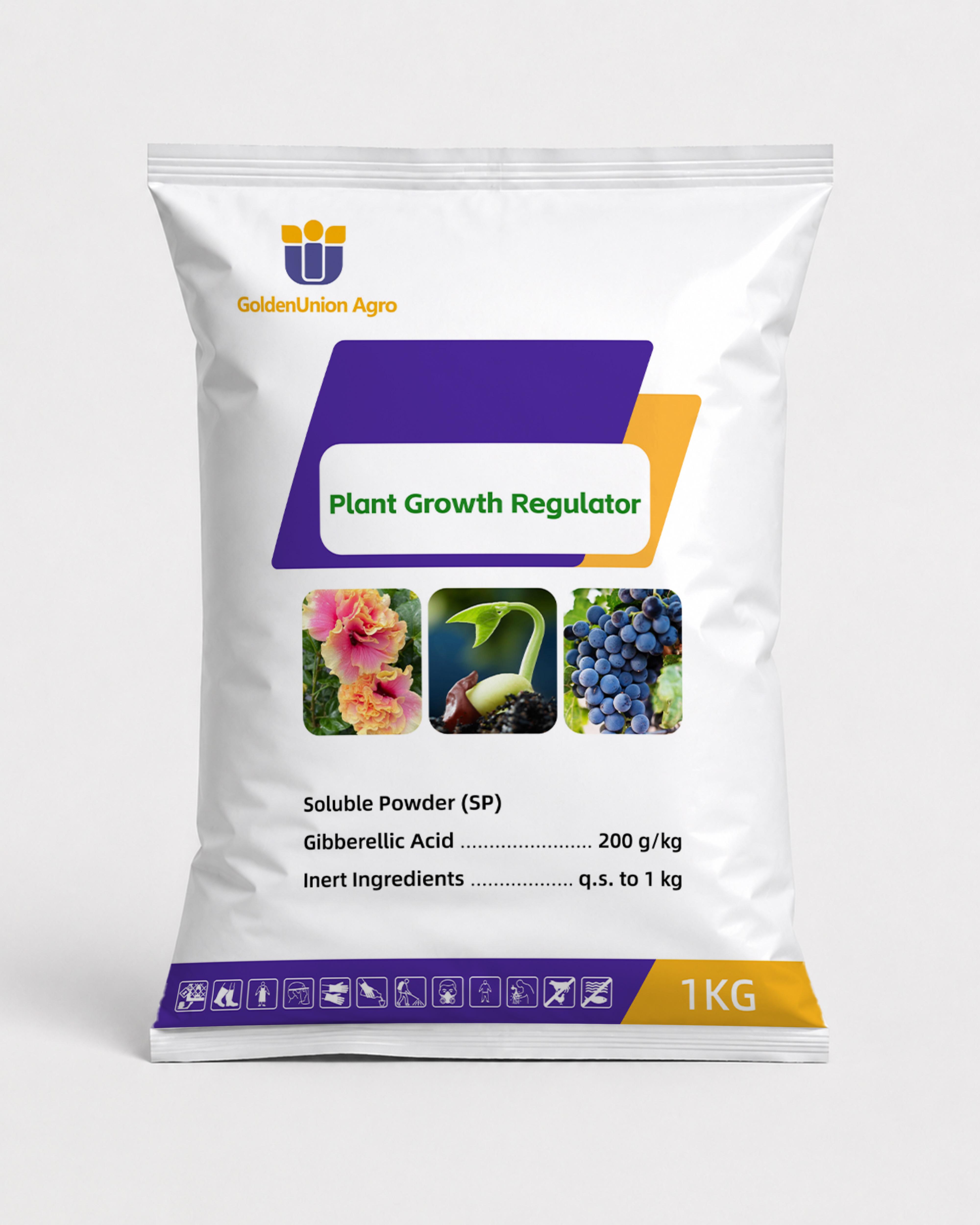
Gibberellic Acid 20% SP
Gibberellin-type PGR, mainly used to regulate plant growth, promote stem and shoot elongation, improve fruit set, increase fruit size, break dormancy, improve seed germination, and manage crop development in fruits, vegetables, field crops, ornamentals, turf, and other registered crops.
Active Ingredient
Formulation
Packaging
Gibberellic Acid
SP
50~10,000 g/bag
25 kg/drum or bag
Customized packaging & labels available
Available Formulations40% EC; 4% SL; 20%, 40% SP
Technical Material (TC)90%
Combination FormulationsBrassinolide, Indole Acetic Acid (IAA), Thidiazuron, Benzyladenine, Forchlorfenuron, Paclobutrazol, Diethyl Aminoethyl Hexanoate, etc.
Features
Promotes cell elongation and plant growth, supports fruit set and fruit enlargement, helps break dormancy, stimulates seed germination, and improves crop development under suitable crop and environmental conditions.
Acts as a gibberellin plant hormone, regulating gene expression and physiological processes related to cell elongation, enzyme activation, seed germination, flowering, fruit set, and fruit development.
Mainly suitable for grapes, citrus, banana, blueberry, cherry, strawberry, celery, carrot, melon, cucumber, pepper, spinach, sugarcane, cotton, rice, ornamentals, turfgrass, and other crops where locally registered.
Application Guide
| Application Crops | Purpose | Recommended Application Rate | Application Timing |
|---|---|---|---|
| Vegetable Crops | |||
| Celery, Carrot, Spinach, Lettuce for Seed | Promote plant height, improve harvest quality, delay leaf senescence, support recovery under cool-weather stress, and promote uniform bolting or seed production where registered. | Celery: 60–300 g/ha; Carrot: 60–370 g/ha; Spinach / leafy greens: 250–620 g/ha; Lettuce for seed: 60–250 g/ha | Apply at the crop stage specified on the local label. For celery, use before harvest within the approved timing window; for carrots, apply after emergence when foliar recovery or delayed senescence is desired; for spinach and leafy greens, apply before harvest under cool growing conditions. |
| Vegetable Crops | |||
| Melon, Watermelon, Cucumber, Pepper | Promote plant growth, improve fruit set under cool-weather or poor pollination conditions, and support fruit enlargement where locally registered. | Melon, watermelon, cucumber: 60–250 g/ha; Pepper: 60–185 g/ha | For melons and watermelons, apply before bloom and repeat at 10–14 day intervals where locally registered. For cucumber, applications after fruit set may be used where registered. For pepper, apply after planting, during flowering, or at early picking according to the desired crop response. |
| Field Crops | |||
| Cotton, Rice, Sugarcane | Promote early growth, improve seedling vigor, support rice seed germination and emergence, stimulate sugarcane growth, and help maintain yield or biomass under suitable crop conditions. | Cotton foliar / furrow application: 60–370 g/ha; Rice seed treatment: 25–50 g per 100 lb seed; Rice seedling post-emergence treatment: 120–185 g/ha; Sugarcane: 60–125 g/ha | Apply cotton from cotyledon to 5-leaf stage where locally registered. Use on rice seed before drilling or dry broadcast, or apply to rice seedlings at approved early leaf stages. Apply to sugarcane at the 1st to 5th internode stage according to local label. |
| Fruit Crops | |||
| Grape, Citrus, Banana, Blueberry, Cherry, Strawberry | In grapes, promote cluster elongation, berry thinning, berry sizing, and cluster quality. In citrus, delay rind aging, manage harvest timing, improve peel strength, and support fruit set in selected mandarins. In banana, blueberry, cherry, and strawberry, support fruit growth, fruit set, fruit quality, runner production, or crop development where registered. | Grape: 250–3,950 g/ha; Citrus: 300–3,450 g/ha; Banana: 60–370 g/ha; Blueberry: 1,235–4,940 g/ha; Cherry: 250–1,110 g/ha; Strawberry runner production: 925–1,545 g/ha | Application timing is highly crop-specific. For grapes, apply at flower-cluster elongation, bloom, or early berry-sizing stages according to target purpose. For citrus, apply before or after color break, at petal fall, or postharvest according to the target fruit response. For blueberries and cherries, apply at the flowering or post-bloom stages specified on the label. |
| Cash Crops / Ornamentals / Turf | |||
| Artichoke, Hops, Ornamentals, Flowers, Bermuda Golf Turf | Accelerate artichoke maturity, improve hop yield and picking, promote flowering or plant growth in ornamentals, and initiate or maintain turf growth during cold-stress periods where locally registered. | Artichoke: 620–1,235 g/ha; Hops: 250–370 g/ha; Ornamentals / flowers: 620–1,235 g/ha; Bermuda golf turf: 620–1,545 g/ha | Apply according to crop-specific local label. Avoid treatment when the crop is stressed or when excessive elongation, bolting, delayed maturity, or reduced return bloom may occur. |
Target Crops
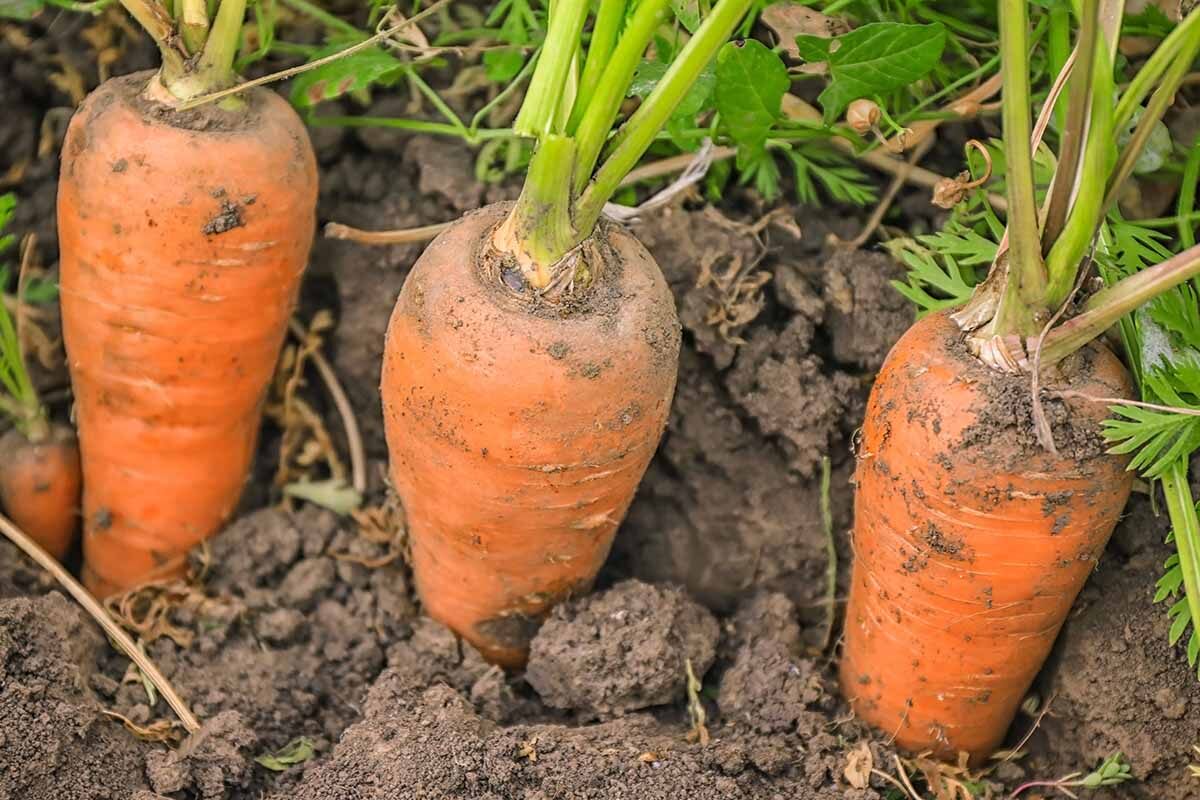
Vegetables
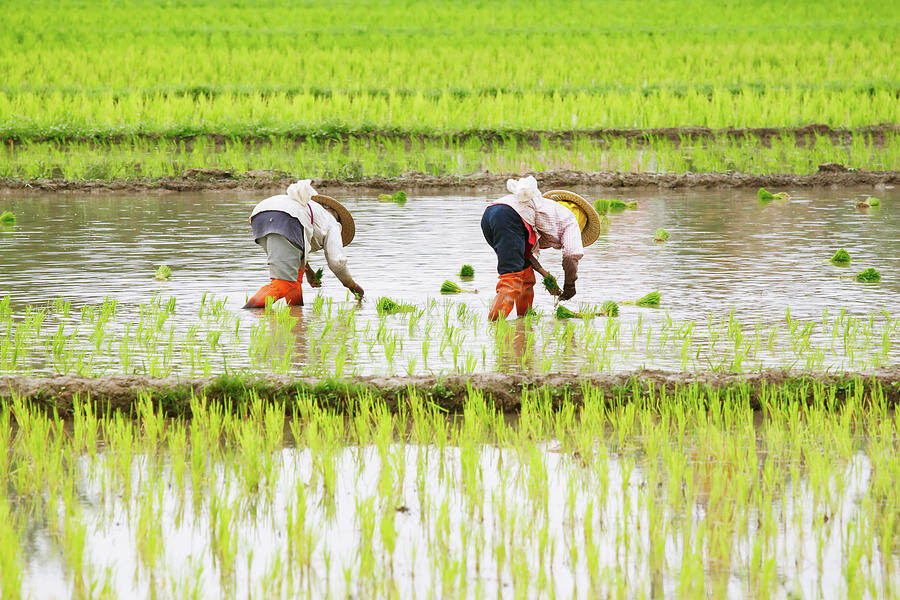
Field Crops
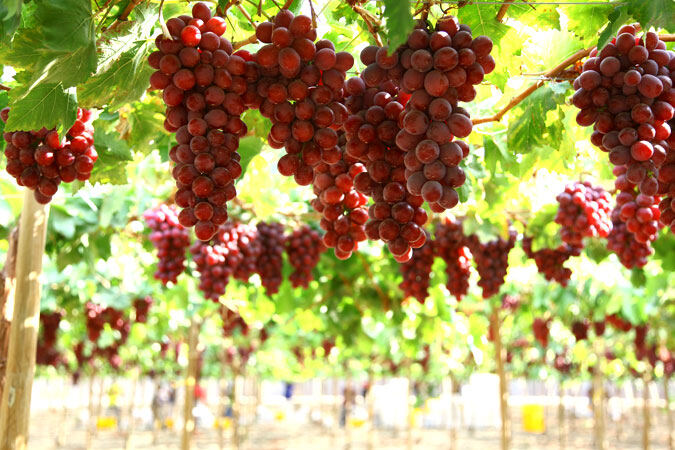
Fruits
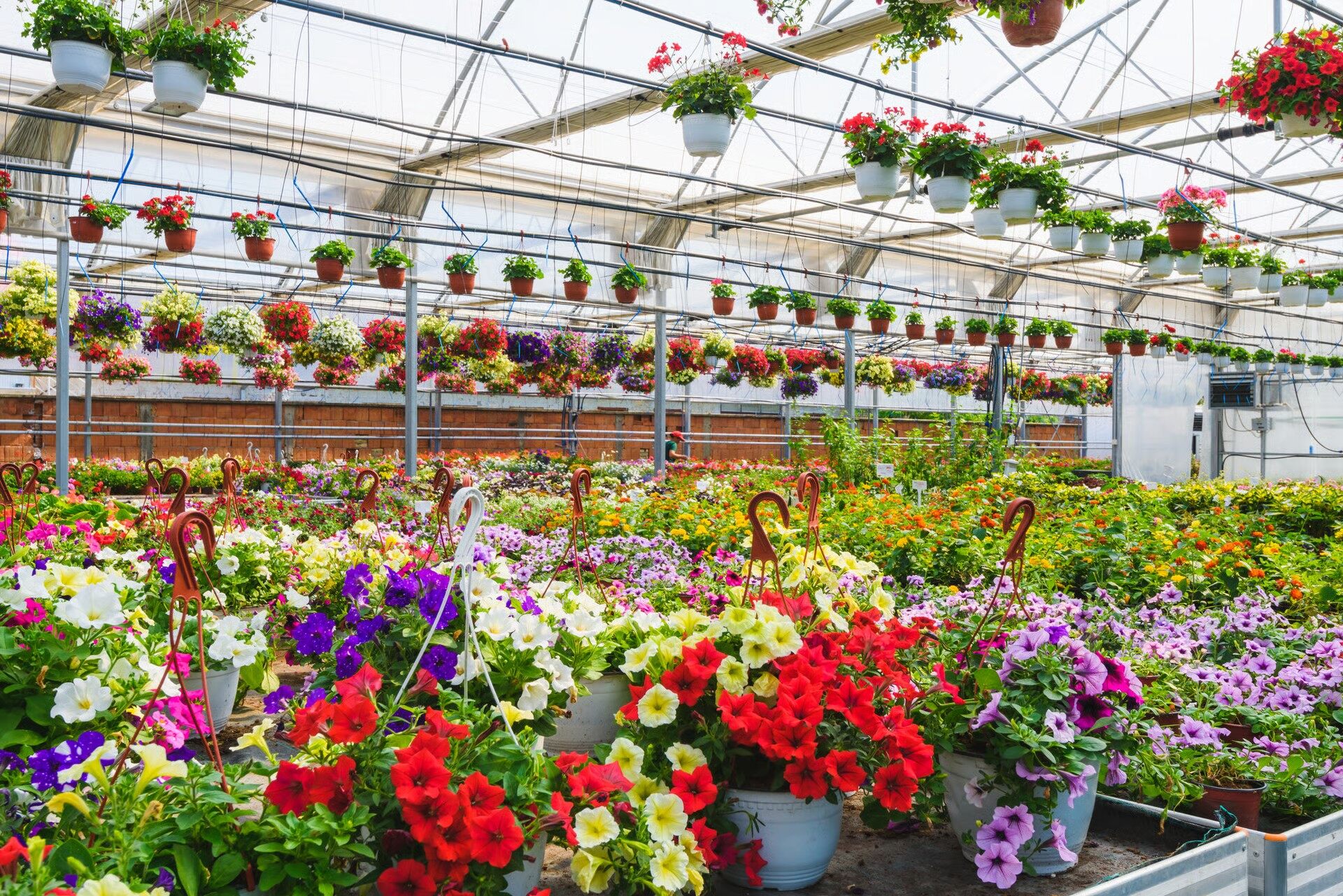
Flowers
No control objects data available